
Arch Pain Massage: What Helps, How Hard to Press, When to Book
Massage can ease arch pain, and the best results come from working the whole chain: the sole of the foot, the calf above it, and the way you load the foot day to day. A few minutes of ball rolling at home is a sound start. If the pain keeps returning, a trained massage therapist can work the calf and foot with a precision a tennis ball cannot match, and adjust pressure as you talk. This guide gives you the routine, the pressure rules, the evidence, and the signs that mean you should stop and see a health care provider.
TL;DR
- Gentle rubbing of sore foot muscles can bring relief, according to Harvard Health Publishing, and a tennis ball under the arch is the simplest way to do it.
- Roll for one to two minutes per foot and keep the pressure at “working but tolerable”. Sharp or lingering pain means stop.
- For plantar fasciitis, a common cause of arch and heel pain, deep massage of the calf is one of the hands-on methods linked to improved pain and mobility.
- Pain that has not improved after one to two weeks of home care, or pain after an injury, needs a medical check first.
- When home care stalls, a deep tissue or sports massage session targets the calf, arch and surrounding tissue with pressure that is set around you.
Table of Contents
- Why the arch hurts, and what massage can realistically do
- A simple at-home arch massage routine
- How much pressure is right?
- What the research says about hands-on treatment
- Our view on arch pain
- When to stop and get medical care
- Booking a session in Austin
- FAQ
- Sources
Why the arch hurts, and what massage can realistically do
The arch is a spring. A band of tissue called the plantar fascia runs from your heel bone to the base of your toes, and small muscles sit above it. Every step stretches and releases that spring. Long days on hard floors, a sudden jump in running or walking, tight calves, or new shoes can overload it.
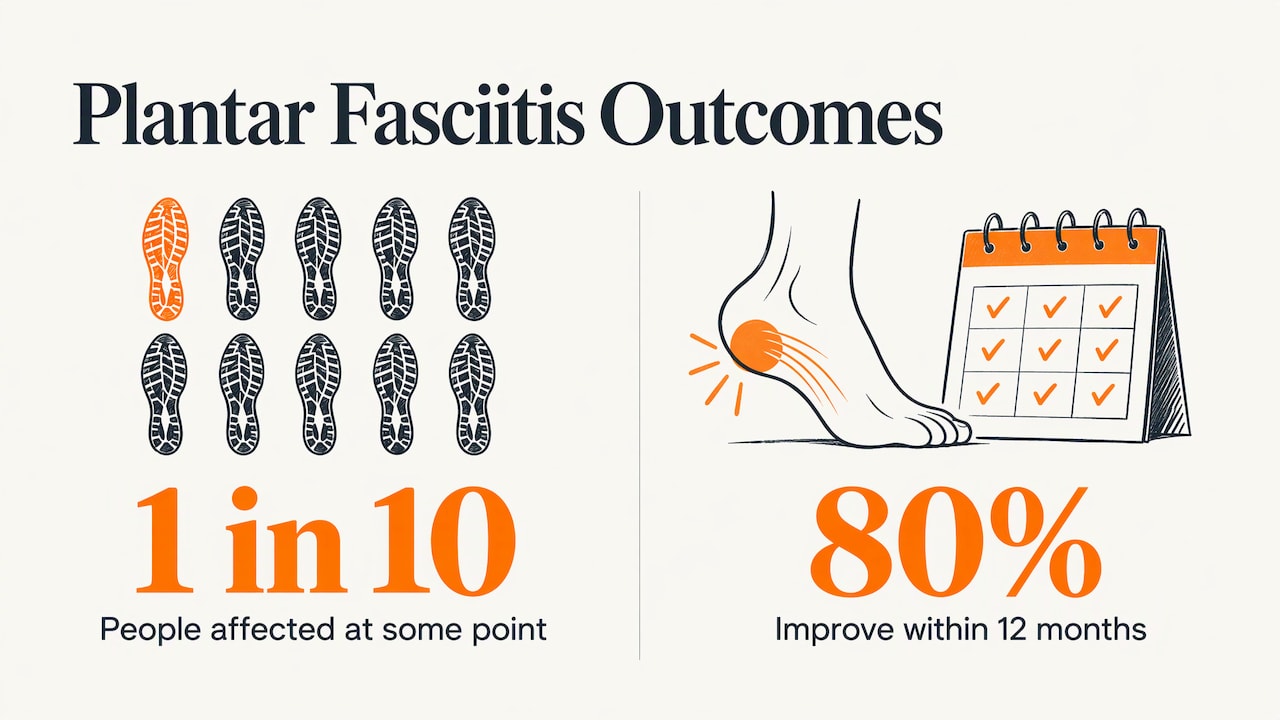
The best-known cause is plantar fasciitis, irritation of the plantar fascia. The American Family Physician summary of the physical therapy guideline says it classically shows up as pain on the inner side of the heel that is worst with the first steps after rest. The pain often spreads into the arch. The AAFP also reports that about one in 10 people will have it at some point, and about 80% improve within 12 months with nonsurgical care.
What massage does well here is reduce tension in the tissue and the muscles feeding it. Harvard Health Publishing notes that massage may improve circulation, stimulate muscles, reduce tension and often ease pain. That is a realistic goal: less guarding, easier first steps, and a foot that tolerates the day better while you address the cause of the overload.
One caution from the same source: do not massage a foot that is visibly inflamed or that you suspect is injured. Hot, swollen, bruised or suddenly painful feet belong in the medical section further down, not under a ball.
A simple at-home arch massage routine
This routine takes about ten minutes. Do it seated, with the foot relaxed, after a warm shower or at the end of the day.
1. Roll the arch with a tennis ball
The UMass Chan Medical School self-massage guide describes the standard technique: place a tennis ball under the foot and roll it slowly side to side across the whole arch, then from heel to toes, for one to two minutes per foot, until the tension eases.
Where it goes wrong: rolling fast, or leaning your full body weight onto the ball. Slow passes let the tissue release. Fast, heavy passes make the foot brace against you.
2. Pause on tender spots
When you find a tight, tender spot in the arch, stop the roll and hold light pressure there for a few seconds, then continue. A registered trial protocol for the tennis ball method describes pressure on trigger points in the arch, heel and plantar fascia without excessive discomfort, done once daily for 5 to 10 minutes per foot. Think of that as the ceiling: noticeable, never sharp.
3. Add the calf
Arch pain rarely starts only in the arch. The AAFP summary of the guideline reports that deep massage to the back of the calf combined with nerve mobilization can improve pain and joint mobility for up to six weeks. Sit with your leg extended, and use your thumbs or the heel of your hand to work up the calf in slow strokes from the Achilles toward the back of the knee. Spend extra time on any tight band you find, and avoid pressing directly into the back of the knee.
4. Try a chilled ball
A 2023 randomized trial compared several methods for plantar fasciitis and found that rolling a frozen tennis ball under the arch from the heel to the ball of the foot, two minutes at a time, improved foot function more than gua sha or positional release over a seven-day course. The participants pushed into discomfort but not pain. A frozen water bottle works the same way if you do not have a ball you can chill.
5. Finish with an easy stretch
The AAFP lists plantar fascia stretching and ice massage as part of initial treatment. After rolling, pull your toes gently back toward your shin and hold for 20 to 30 seconds. Do it again after a long period of sitting, because the first steps are usually the sorest.
If you train hard and your feet are part of the load, how you recover matters as well. A practical overview of recovering after exercise covers the habits around rest and recovery that make arch work stick.
How much pressure is right?
Pressure is the question most people get wrong, and it is the one that decides whether the massage helps.
Use this scale. Rate the sensation from 0 (nothing) to 10 (worst pain).
| Pressure level | What it feels like | Use it? |
|---|---|---|
| 1 to 3 | Pleasant, light, relaxing | Good for warming up |
| 4 to 6 | Firm, a “good hurt”, easing as you hold | Working zone |
| 7 and up | Sharp, burning, tingling, or you hold your breath | Stop |
Two published sources point the same way. The UMass guide says self-massage should never be painful and that you should stop at any sharp or ongoing discomfort. The trial protocols we cited describe pressure that stays short of excessive discomfort. Both treat sharp pain as the signal to back off, not push through.
A few practical rules:
- Start light. The arch is dense with small muscles and sensitive tissue. Build up over several days.
- Stay on the soft tissue. Avoid pressing hard on the bony heel or directly on a bruise.
- Judge by the next morning. A foot that feels better, or the same, is fine. A foot that is sorer than before means you went too deep.
- Keep sessions short. One to two minutes per foot per pass is enough. More is not better.
This is also where working with a therapist helps. Pressure is easier to calibrate when someone is watching your face and asking, and that communication is the heart of how we work.
What the research says about hands-on treatment
Self-massage is one thing. Hands-on soft-tissue work from a trained therapist has its own evidence base, mostly in plantar fasciitis.
The 2023 clinical practice guideline from the Academy of Orthopaedic Physical Therapy, published in JOSPT, recommends that clinicians use manual therapy aimed at the joints and soft tissues of the lower leg and foot to decrease pain and improve function in people with plantar heel pain.
The AAFP summary of the 2025 physical therapy guidance gives specifics on how long different hands-on methods have been shown to help:
| Method | Reported benefit |
|---|---|
| Trigger point release with gentle, firm pressure plus stretching of the calf muscles | Better mobility and pain for up to 2 weeks |
| Deep massage to the back of the calf with nerve mobilization | Better pain and joint mobility for up to 6 weeks |
| Instrument-assisted soft-tissue work on the calf and plantar fascia | Measurable improvement for up to 90 days |
Source for the table: AAFP summary of the APTA guidance, 2025.
A 2018 critical review of manual therapy for plantar heel pain found that five of six randomized trials reported a positive short-term effect, mostly from soft-tissue mobilization with or without stretching. A 2026 scoping review of deep friction massage and Graston technique found significant improvements in the Foot Function Index, a standard questionnaire on foot pain and function, with four of six studies passing the threshold for a meaningful change. Its authors suggest that a combined approach shaped around the person may give the best outcomes.
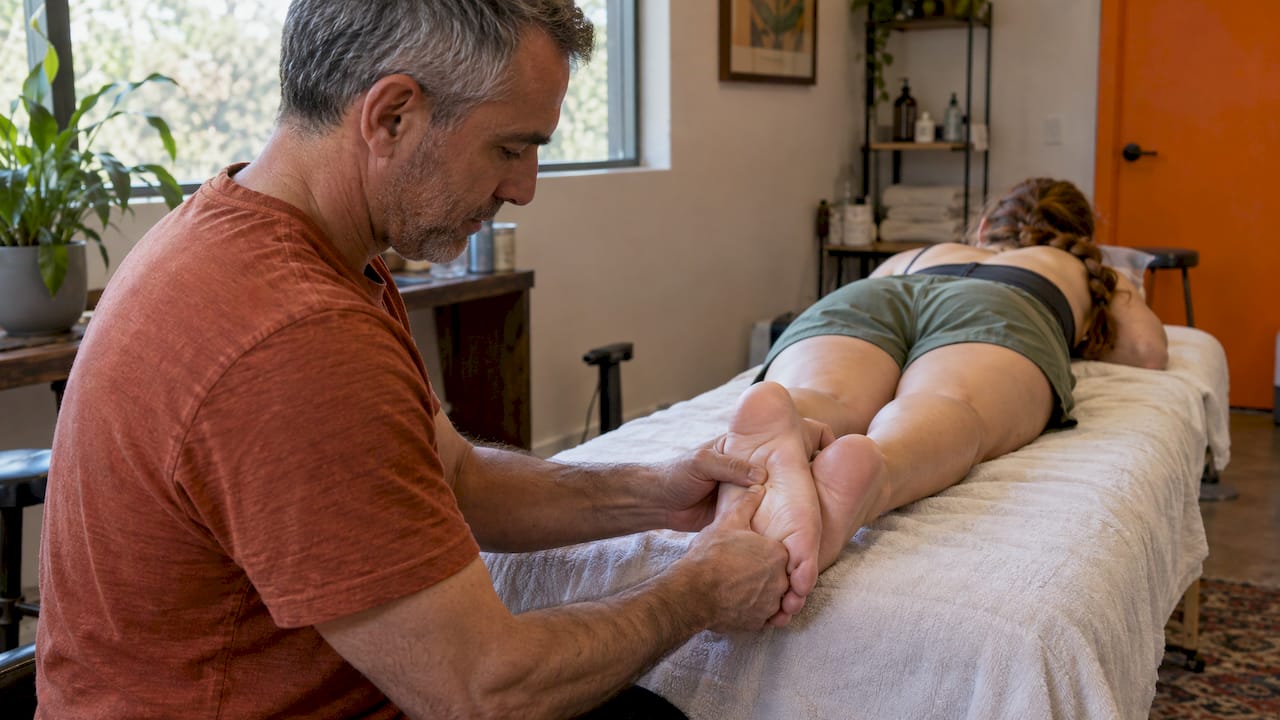
The pattern is clear: calf and sole together, pressure matched to the person, and a stretching or loading plan alongside. That is how a good session is built.
Our view on arch pain
We see arch pain as a problem of load and tension, not just a sore spot. The arch is where you feel it, but the calf, the Achilles, and the way you push off often decide how much it hurts. A session that only rubs the arch misses half the picture.
Our therapist, Rick Snider, brings a healthcare background and his own athletic experience to the table. In practice that means we talk with you throughout: where the pain is, when it flares, how the pressure feels. Pressure that is right for one person is wrong for the next, and we adjust as we go.
For arch pain we offer deep tissue and sports massage, trigger point therapy, and stretching and joint mobilization, in our studio or at your location. Runners, desk workers on their feet less than they would like, and people who stand all day come in with the same complaint and need different sessions. That is why we do not run a fixed routine.
If your arch has bothered you for weeks, we would rather work on it with you than have you keep grinding a tennis ball into a foot that is already irritated.
Operations
When to stop and get medical care
Massage is for ordinary overuse soreness. These signs need a health care provider first. MedlinePlus lists them as reasons to contact a provider about foot pain:
- sudden, severe foot pain
- pain after an injury, especially with bruising, bleeding, or being unable to put weight on the foot
- redness or swelling of a joint, an open sore or ulcer, or fever
- foot pain if you have diabetes or a condition that affects blood flow
- pain that has not improved after one to two weeks of home treatment
If you fall into one of these groups, get checked before any massage, whether at home or in a studio. The AAFP also notes that ultrasound imaging is reasonable when plantar fasciitis pain lasts past three months, which is a good reminder that long-running pain deserves a proper diagnosis.
Persistent pain also has a life of its own. If your pain has spread beyond the foot or has lasted for many months, this overview of what to expect from a chronic pain assessment explains how to prepare for that conversation with a doctor. Our guide to massage for chronic pain shows where massage fits once that is sorted out.
Booking a session in Austin
If a week or two of careful home care has not settled your arch, and nothing on the warning list applies to you, a session is the logical next step. We offer massage in our Austin studio and at your location.
For arch pain, the most relevant options are:
- Deep tissue massage, published at $120 to $245, for the calf and the dense tissue of the foot.
- Sports massage, published at $120 to $145, for runners, cyclists and anyone whose training loads the foot.
- Trigger point therapy and stretching and joint mobilization, which suit the tender spots and stiffness that keep the arch irritated. These two have no published price.
Our massage services in Austin page lists all of them. For a deeper look at the technique, see our pages on deep tissue massage in Austin and massage for plantar fasciitis.
Tell us at the start where it hurts and when. Pressure is adjusted to your comfort throughout, and if something feels too much, you say so and we change it. Book a session at Howdy Massage and bring the shoes you wear most.
If your pain is broader than the arch, our guides to foot pain massage and Achilles tendonitis massage cover the neighboring areas.
FAQ
Should I massage arch pain?
Yes, in most cases of overuse soreness, gentle massage is reasonable. Harvard Health Publishing says gentle rubbing of sore foot muscles and joints can bring relief. Skip it if the foot is inflamed, swollen, or you suspect an injury, and see a provider.
Can plantar fasciitis be massaged out?
Massage can reduce the pain and stiffness, and several guidelines support hands-on soft-tissue work as part of care. Most cases also need stretching and a change in load, and the AAFP reports that most people improve within 12 months with nonsurgical treatment. Think of massage as one part of getting there.
Can I massage my arch too hard?
Yes. Self-massage should never be painful, and sharp or ongoing discomfort is the cue to stop, as the UMass self-massage guide states. Stay at a firm but tolerable level and check how the foot feels the next morning.
How often should I roll my arch?
The tennis ball method in the UMass guide is one to two minutes per foot. The registered trial protocol uses once-daily sessions of 5 to 10 minutes per foot. Start at the short end and build up as your foot allows.
When should I book a professional massage instead?
Book when home care has not helped after a week or two, when pain keeps coming back, or when you want the calf and foot worked together at the right pressure. If any warning sign from the medical care list applies, see your provider first.
Sources
- AAFP: Plantar Fasciitis, Guidelines From the American Physical Therapy Association (2025)
- AAFP: Plantar Fasciitis (2019)
- Harvard Health Publishing: ways to fix foot pain
- UMass Chan Medical School: Self-massage guide, Tips, Tools and Techniques
- ClinicalTrials.gov NCT07616492: Bowen therapy and tennis ball technique
- JOSPT: Heel Pain, Plantar Fasciitis, Revision 2023
- PMC: Graston Technique and Deep Friction Massage review (2026)
- PMC: Gua Sha, Cryostretch, and Positional Release comparison (2023)
- PubMed: Manual therapy for plantar heel pain (2018)
- MedlinePlus: Foot pain
- Recovering after exercise: a practical guide
- Chronic pain assessment: what to expect and how to prepare