
Heel Spur Massage: What Helps and How to Do It
Massage can ease heel spur pain, and the reason is not the spur itself. The pain usually comes from an irritated plantar fascia, the band of tissue along the sole of your foot, and from tight calf muscles pulling on it. Massage works on those tissues. A therapist who works on the foot, calf and the chain above it can do much more than a few minutes of rolling a ball under your arch. At Howdy Massage in Austin, Rick Snider builds each session around where you actually hurt and how much pressure feels right to you.
TL;DR
- Heel spurs are often a bystander. Orthopaedic surgeons note that most people with a heel spur have no heel pain, so treating the sore tissue, not the bone, is the usual route.
- Research reviews find manual therapy, mostly soft tissue work, helps plantar heel pain in the short term, and the 2023 U.S. physical therapy guideline recommends it.
- Work the calf and the arch, not the sorest spot on the heel, and pair massage with daily stretching.
- Sudden injury, numbness, swelling or pain that keeps getting worse calls for a doctor first.
- Our deep tissue and trigger point sessions in Austin are built for exactly this pattern of tension.
Table of Contents
- What a heel spur is, and why it hurts
- Does massage help heel spurs?
- Can massage remove a heel spur?
- Where to work: the foot, the arch and the calf
- Pair massage with stretching
- When massage is the wrong first step
- What a session with a therapist adds
- Book a session in Austin
- Our view
- FAQ
- Sources
What a heel spur is, and why it hurts
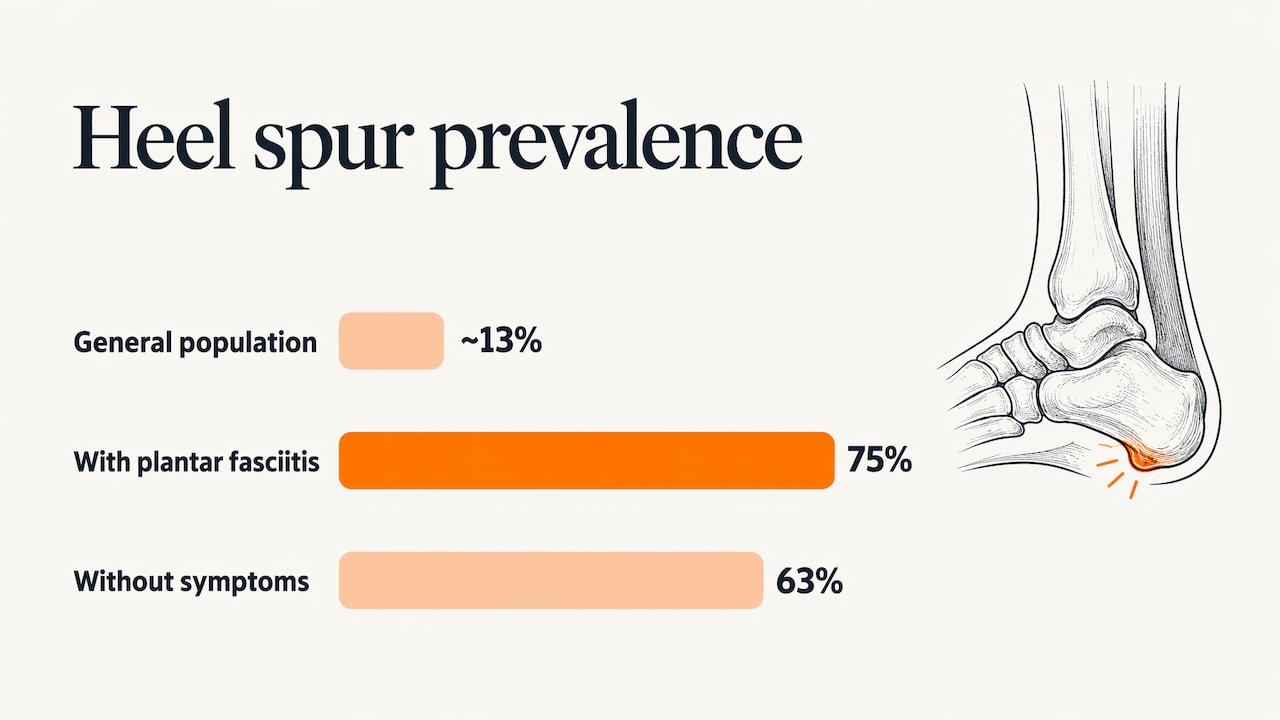
A heel spur is a small bony growth on the underside of the heel bone. It shows up on an X-ray, and it often gets the blame for heel pain. The evidence points elsewhere. A 2025 literature review reports spurs in about 13% of the general population, and in 75% of people with plantar fasciitis versus 63% of people without symptoms. There is no definite cause-and-effect link between the two.
The spur is not what hurts. The typical pain pattern is a stabbing or aching feeling on the inner side of the heel, worst with the first steps after sleep or a long sit. The 2023 clinical practice guideline from the American Physical Therapy Association describes this as the hallmark of plantar heel pain, along with tenderness where the plantar fascia attaches to the heel. It also lists risk factors: limited ankle flexibility, running, and work that keeps you on your feet on hard surfaces.
If you work on concrete, run Austin’s greenbelt trails, or stand all day, the load on that tissue adds up. That is the problem massage addresses.
Does massage help heel spurs?
Short answer: yes, for the pain and function problems that come with a spur. The evidence is encouraging, and it is worth knowing what each piece shows.
- A critical review of six randomized trials found that five showed a positive short-term effect after manual therapy, mostly soft tissue mobilization. The authors concluded soft tissue mobilization is effective for plantar heel pain.
- A 2017 systematic review of seven trials found that adding manual therapy to treatment gave greater improvement in function in 6 of 7 studies, with benefits seen from 4 weeks to 6 months. Its authors recommend combining joint and soft tissue techniques with stretching and strengthening.
- A 2016 review of eight trials concluded manual therapy is effective for plantar heel pain.
- A 2025 trial of 60 people found that one 40-minute session of traditional Thai massage significantly reduced pain right away and at 24 hours.
- A 2026 scoping review found improvements in the Foot Function Index, a questionnaire about pain and daily activity, with deep friction massage.
The national guidance agrees. The APTA guideline recommends manual therapy aimed at the joints and soft tissue of the lower leg and foot to reduce pain and improve function. The American Academy of Family Physicians’ 2025 summary of that guideline reports that deep massage of the back of the calf combined with nerve mobilization improved pain and joint mobility for up to 6 weeks, and that instrument-assisted soft tissue work on the calf and plantar fascia produced measurable improvement for up to 90 days.
The practical reading: massage is a strong part of a plan, not a stand-alone cure. The best results in the research come when hands-on work sits beside stretching and strengthening.
Can massage remove a heel spur?
No, and you do not need it to. The spur is bone, and it stays after symptoms resolve, according to the American Family Physician review. That same review says a spur on an X-ray is a common incidental finding in people with no pain. The goal of massage is to calm the tissue that hurts, restore calf and foot mobility, and let you walk comfortably again.
The outlook is good. The AAOS says more than 90% of patients improve within 10 months with simple methods such as rest, stretching and physical therapy that may include massage. Removing the spur is generally not recommended, since the literature review above notes the spur is not the pain source.
Where to work: the foot, the arch and the calf
The most common mistake with heel pain is digging into the sorest point on the heel. The 2025 literature review notes that massage of the plantar fascia at the arch is usually recommended, while avoiding direct treatment of the painful area. Think of it as working around the problem and up the chain.
The calf
Tight calf muscles (the gastrocnemius and soleus) and the Achilles tendon pull on the heel. The calf is often where the biggest gains are.
- Sit with your leg supported and use your thumbs or the heel of your hand.
- Use slow, circular strokes from just above the Achilles up to the back of the knee.
- Pause on tender knots and hold light-to-moderate pressure until the tension softens.
- Spend two to three minutes per leg.
The arch
- Sit and rest your foot on your opposite knee.
- Use your thumb to stroke from the ball of the foot back toward the heel along the arch.
- Keep the pressure firm but comfortable, and stop short of the tender spot on the heel’s inner edge.
- Another two to three minutes per foot is plenty.
How hard and how often
Pressure should feel like a good ache you can breathe through, never sharp or pinching. If the foot feels worse an hour later, you went too hard. Many people do a short routine once or twice a day, often after warming the foot with a walk or a warm shower. Frequency is a matter of how your foot responds, so scale back if it flares.
Why the first steps matter
Because the pain peaks with first steps, try a gentle self-massage and stretch before you get out of bed. It primes the tissue before it takes your weight.
Pair massage with stretching
Stretching is the backbone of home care. The AAOS notes that stretching the arch and the heel cord is the most effective way to relieve the pain, and advises doing the stretches three times a day: morning, midday and before bed, on both sides even if only one heel hurts. The same handout mentions night splints, which a doctor can prescribe for morning heel pain.
A simple routine:
- Calf stretch against a wall. Step one foot back, keep the heel down and lean forward until you feel the calf pull.
- Plantar fascia stretch. Sit, cross the foot over the opposite knee, pull the toes back toward the shin and feel the stretch along the arch.
- Massage the calf and arch after the stretches, when the tissue is warm.
Heel padding is another standard first-line measure, listed in the family physician review. Supportive footwear matters too if your job keeps you standing.
When massage is the wrong first step
Heel pain is usually mechanical, but not always. See a doctor before any massage if:
- the pain started with a fall, twist or direct blow;
- the heel or foot is visibly swollen, red or warm;
- you have numbness, tingling or burning, especially at night;
- you have diabetes, poor circulation or a clotting condition and notice any new foot pain;
- the pain keeps getting worse over a few weeks instead of settling.
The 2023 guideline’s diagnostic checklist includes ruling out nerve problems such as tarsal tunnel syndrome, which is one reason an exam is worth having when symptoms do not fit the usual pattern. Tell your massage therapist about any of these conditions, and about blood thinners, before a session so the work can be adjusted.
What a session with a therapist adds
Self-massage reaches the foot and lower calf. A therapist can work the whole chain: the calf, hamstrings, the sole of the foot, and the hips and low back if they feed into how you load your foot. The research above found benefits from soft tissue mobilization, deep friction, trigger point work and calf work, and these are hard to apply to yourself with the same depth and precision.
Here is what we offer in Austin that fits heel pain:
- Deep tissue massage for the stubborn tension in the calves and the backs of the legs.
- Trigger point therapy for knots that refer pain toward the heel.
- Sports massage for runners, cyclists and anyone training through foot soreness.
- Stretching and joint mobilization to restore ankle and foot movement.
The APTA guideline names myofascial release and myofascial trigger point therapy among soft tissue mobilization techniques, so this is the same toolkit we use. You can read more in our guide to massage for plantar fasciitis, learn how trigger point massage works, or see how myofascial release feels.
What to expect, and how to get the most from it
Talk through where the pain is, when it is worst and what you do all day. Sessions stay adjustable throughout: you say when pressure is too much or not enough. Many people find the calves are far more tender than they expected, which is a clue that the real work is above the heel.
The University of Michigan’s PainGuide distinguishes clinical massage, aimed at a specific condition with targeted outcomes, from general spa relaxation. Heel pain calls for the clinical kind: a clear goal, specific tissue, and a plan for what you do between visits.
Book a session in Austin
If heel pain is cutting into your walks, workouts or workday, we can help you work the calves, arches and tension patterns behind it, in our studio or at your location. Published prices are $120–$245 for Swedish and deep tissue massage, and $120–$145 for sports massage. Trigger point therapy and stretching with joint mobilization are listed without a published price. See all options on our massage services page or read about deep tissue massage in Austin.
Our view
Most people come to us with a heel spur diagnosis and an assumption that the bone is the enemy. In our experience of the research, the better question is what the tissue around it is doing. When the calf is tight and the arch is overloaded, the heel takes the strain.
That is why we do not chase the sore spot. We talk first, find where you hold tension, and adjust pressure as we go, because comfort and communication decide whether a session helps or just hurts. Our approach draws on a healthcare background and athletic experience, and it is consent-driven from start to finish.
Massage works best as part of a routine: bodywork in the studio, stretching at home, and good footwear. We would rather you walk out with a plan you can follow than a quick fix.
Operations
FAQ
Does massage help heel spurs?
It can. Reviews of manual therapy trials report short-term improvements in pain and function for plantar heel pain, and the 2023 U.S. physical therapy guideline recommends manual therapy for it. Massage treats the sore tissue around the spur, not the bone.
Should I massage right on the heel spur?
It is better to work the arch and the calf and avoid pressing hard on the painful spot. A 2025 literature review notes that arch massage is usually recommended while avoiding direct treatment of the painful area.
How often should I stretch and massage?
The AAOS recommends doing heel and arch stretches three times a day. A short massage of the calf and arch once or twice daily is a common companion, kept at a comfortable pressure. Scale back if the foot is sore afterward.
Does the heel spur go away?
The spur itself stays, but the pain usually does not. The AAOS says more than 90% of patients improve within 10 months using simple treatments such as stretching and physical therapy that may include massage.
Sources
- Manual therapy for plantar heel pain, PubMed
- Does manual therapy improve pain and function in patients with plantar fasciitis? (2017)
- The symptomatic and functional effects of manual physical therapy on plantar heel pain (2016)
- Randomised control trial of Thai massage for plantar heel pain (2025)
- Impact of Graston Technique and Deep Friction Massage (2026)
- Heel Pain, Plantar Fasciitis: Revision 2023, JOSPT
- Plantar Fasciitis: Guidelines From the APTA, AFP (2025)
- Plantar fasciitis: A literature review (2025)
- Plantar Fasciitis and Bone Spurs, OrthoInfo
- Plantar Fasciitis, American Family Physician (2019)
- Plantar Fasciitis handout, OrthoInfo
- Massage & Spa Therapy, PainGuide