Massage for Calf Strain: When to Start and What Helps
Massage can be a useful part of calf strain recovery, but timing decides whether it helps. In the first 24 to 48 hours the calf needs protection, not hands-on work. After that, skilled soft tissue work alongside gradual loading can ease pain, loosen the surrounding muscle and get you moving again. If you are in Austin and past the first couple of days, Rick Snider, our licensed therapist, offers sports, deep tissue and trigger point sessions, in the studio or at your location.
TL;DR
- Wait out the first 24 to 48 hours after the injury. Clinical reviews say massage in that window may provoke bleeding in the torn muscle.
- After the acute phase, massage fits into rehab alongside therapeutic exercise and progressive loading, not instead of it.
- Research on massage after muscle injury points to short-term pain relief, better flexibility and less soreness. Moderate pressure, matched to your tolerance, is the norm.
- One painful, swollen calf, especially with warmth, redness or shortness of breath, needs a medical assessment before any massage.
- Sports massage at Howdy Massage in Austin has a published price of $120 to $145.
Table of Contents
- What a calf strain actually is
- Does massage help a calf strain?
- When to start: the phases of calf strain recovery
- What a good calf massage session looks like
- Massage for tight calves without a strain
- Safe self-massage between sessions
- Red flags: when not to massage and who to see first
- What massage cannot do for you
- Booking massage for a calf strain in Austin
- Our approach to calf strain
- Our perspective
- FAQ
- Sources
What a calf strain actually is
The calf is two main muscles. The gastrocnemius is the larger, rounded muscle you see at the back of the lower leg. It crosses both the knee and the ankle. Beneath it sits the soleus, a flatter muscle that works mostly at the ankle. Most calf strains involve the inner (medial) head of the gastrocnemius, usually during a sudden push-off, sprint or jump.
A strain means some muscle fibers were overstretched or torn. People describe a sudden sharp pain, sometimes with a feeling of being hit in the back of the leg, followed by tightness, swelling and a limp. Mild strains settle in days to a couple of weeks. Cleveland Clinic notes that recovery may take several weeks to months depending on severity, and that a previous strain raises the chance of another.
That is why the order of care matters. Massage is one tool among several, and each tool has its phase.
Does massage help a calf strain?
Yes, in the right phase and with realistic expectations. The most useful way to read the research is by what massage has been shown to change.
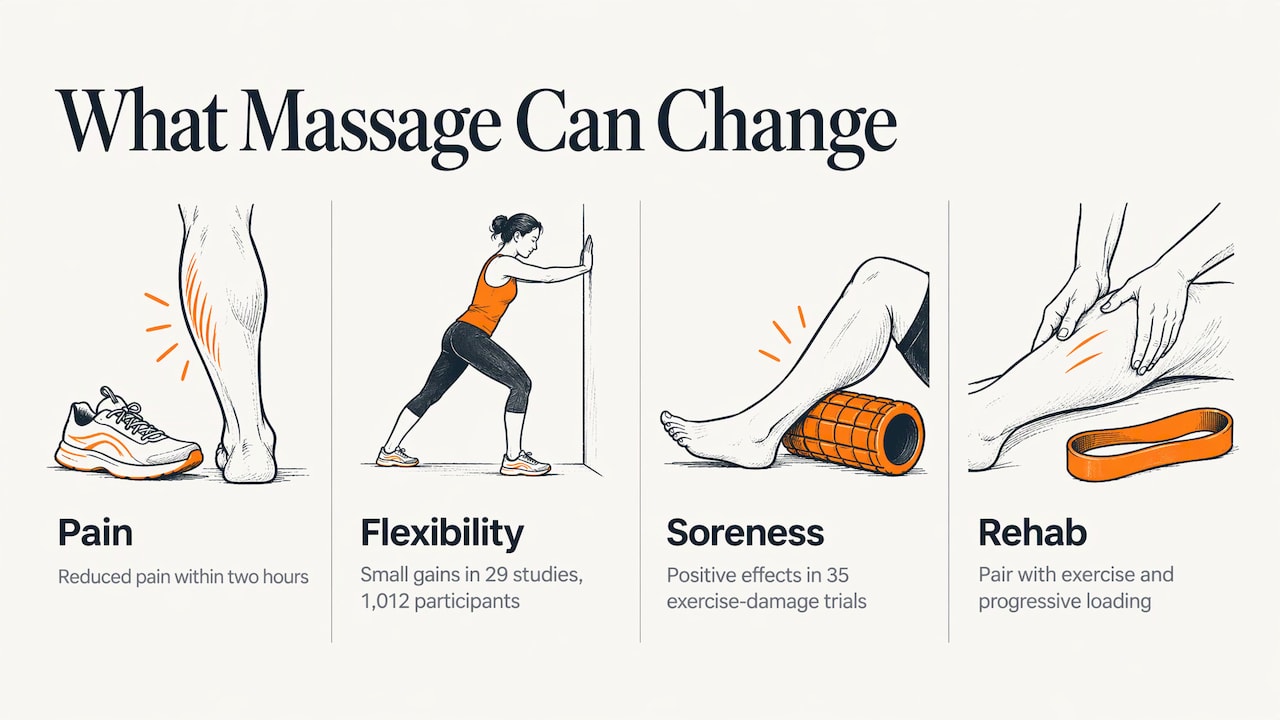
Pain. A U.S. clinical guideline on acute musculoskeletal pain found moderate-certainty evidence that massage reduced pain within two hours. The AAFP’s summary of the same guidance describes short-term pain relief from massage therapy for acute musculoskeletal injuries. For someone limping around with a tight, aching calf, short-term relief is a practical benefit: it lets you walk, stretch and do your rehab exercises with less guarding.
Flexibility and soreness. A meta-analysis of 29 randomized studies with 1,012 participants found small, statistically significant improvements in flexibility and delayed onset muscle soreness after sports massage. Another review of 35 trials found massage was the only physiotherapeutic intervention with positive effects on soreness and muscle recovery after exercise-induced muscle damage.
Rehab context. A 2026 review of sports massage for muscle injury rehabilitation concludes that it can be integrated into comprehensive rehabilitation, particularly alongside therapeutic exercise and progressive loading. That matches how we work: the massage prepares the tissue and calms the guarding, and the exercise rebuilds the calf.
What massage does not do is replace the loading. A calf that has been injured needs to be gradually asked to do more, and massage is the support around that process.
When to start: the phases of calf strain recovery
The first 24 to 48 hours: protect, do not massage
A 2024 clinical review of medial gastrocnemius strain recommends the POLICE approach (protection, optimal loading, ice, compression, elevation) for roughly the first 24 to 48 hours. In that window, soft tissue techniques such as massage are contraindicated because they may cause bleeding in the injured muscle. The same review says soft tissue techniques can be used in the second phase of rehabilitation.
For immediate self-care, Mayo Clinic’s guidance for muscle strains is to protect, rest, ice, compress and elevate. In practice that means:
- Ice for 15 to 20 minutes at a time, every two to three hours while awake for the first few days, with a cloth between the ice and your skin.
- An elastic bandage wrapped from the part farthest from the heart, loosened if you feel pain, numbness or swelling below it.
- The leg raised above heart level, especially at night.
- Crutches or a cane if walking is painful.
Days 3 to about 2 weeks: the acute rehab phase
A December 2025 review describes the acute rehabilitative phase as typically lasting from the first 2 to 3 days up to 2 weeks, or until you can do weight-bearing activity without a limp. This is when gentle soft tissue work starts to make sense: light pressure around the calf, working the surrounding tissue before the injured spot itself, guided by what you can tolerate.
If you are unsure whether you have reached this phase, that is a question for a physician or physical therapist, particularly after a severe strain with bruising or inability to push off. Our comparison of physical therapy and massage explains how the two roles fit together.
Weeks 2 and beyond: the building phase
Once you can walk normally, the work shifts to strength, calf raises, graded return to running or sport and restoring ankle range of motion. Massage in this phase addresses the tightness that builds up in the calf, the hamstring and the foot as you ramp back up. It is also where most recreational athletes book, because the sharp pain is gone but the leg still feels heavy and tight.
What a good calf massage session looks like
The research protocols give a useful frame. The 2026 sports massage review reports 2 to 3 sessions per week, 15 to 30 minutes each, usually over 2 to 4 weeks, with moderate to firm pressure adjusted to the individual. Two things stand out: pressure is individual, and the course is short and focused.
A well-run session on a recovering calf typically moves through these stages:
- A conversation first. Where did it happen, when, what makes it worse, what are you training for? The history tells the therapist how much pressure the calf can take and which areas to leave alone.
- Warming the whole leg. Long, slow strokes from the ankle toward the knee, covering the calf, hamstring and the back of the knee, to calm the nervous system’s protective tension.
- Working the calf in layers. Broad kneading of the gastrocnemius and soleus, with pressure rising only as the tissue accepts it.
- Targeting knots. Sustained pressure on tender trigger points that have formed from overprotecting the injured leg. Our page on trigger point massage explains what this feels like.
- Gentle movement. Ankle circles and a light calf stretch, so the leg moves freely after the work.
Pressure should feel like a strong but productive ache, never sharp, and never something you brace against. A calf that has been strained can guard again quickly if it is pushed too hard. Tell your therapist the moment pressure crosses your limit.
Why communication matters more than depth
It is tempting to ask for the deepest massage possible on a tight calf. A recovering muscle rewards the opposite approach: pressure matched to the tissue on the day. We build sessions around ongoing check-ins, and the pressure changes as you tell us how the calf responds. That adaptability is the point of working with a licensed therapist rather than driving the pressure by guesswork.
Massage for tight calves without a strain
Many people searching for calf massage have no injury, just calves that feel like cables after running, hiking Austin’s greenbelt trails, standing all day or wearing heels. The same logic applies at lower stakes.
A randomized crossover study of 29 healthy volunteers tested a single 10-minute calf massage and found no change in calf stiffness or ankle range of motion at that moment. The authors suggest massage may work better when a muscle has real stiffness changes, such as after eccentric activity like downhill running. That is the case for the calf that stays tight after hard training: a single short rub is not the same as a full session that addresses the whole leg, the foot and the hip.
For tight calves, useful pairings are:
- Massage and stretching together. Stretching and joint mobilization is one of the services we offer, and it suits calves that limit your ankle bend.
- Massage between training blocks. If your calves tighten after heavy weeks, see our notes on massage for DOMS.
- Cyclists and lifters. Calf tightness is common in both, and we cover each: massage for cyclists and massage for weightlifters.
If your calf pain sits low, near the heel, it may involve the Achilles tendon rather than the muscle. Our guide to Achilles tendonitis massage covers that, and the sprained ankle massage guide covers pain after a rolled ankle.
Safe self-massage between sessions
Once you are past the first 48 hours and the calf is no longer swollen or sharply painful, short self-care between professional sessions is reasonable:
- Sit with the leg supported and use your hands to stroke gently from the ankle toward the knee for a few minutes.
- Keep pressure light to moderate. If it hurts sharply, stop.
- Avoid pressing on the center of the injured area early on. Work the muscle around it first.
- Follow with easy ankle movement and the stretches or exercises you were given.
Self-massage is a supplement. The advantage of a session with a therapist is that someone else can reach the whole calf while you are fully relaxed, which a tool or your own hands cannot match, and can read how the tissue responds as it happens.
Red flags: when not to massage and who to see first
Some calf pain is not a strain, and these signs need medical assessment before any massage. Cleveland Clinic says to contact a provider if you cannot walk or bear weight, cannot bend the foot, ankle or knee, have severe calf pain, or notice swelling in the lower leg, foot or ankle.
Two conditions are worth knowing by name:
- Deep vein thrombosis (DVT), a blood clot in a deep leg vein. The 2025 review tells athletes to watch for worsening pain, swelling and tenderness, and notes DVT can accompany medial gastrocnemius and soleus injuries in up to 6 to 20 percent of patients. Sudden pain in one calf, new swelling in one leg, or warmth, redness or darkened skin call for prompt assessment by a physician.
- Acute compartment syndrome, where pressure builds inside the muscle. The same review lists pain out of proportion to the injury, pallor, tingling or numbness, a tense calf and a missing pulse as warning signs. This is an emergency.
Shortness of breath, chest pain or coughing up blood together with calf symptoms is an emergency: call 911. If any of these apply, see a doctor or go to urgent care first, and book massage once you have been cleared.
What massage cannot do for you
A calf strain recovers because the muscle repairs and is gradually reloaded. Massage supports that process by easing pain, reducing guarding and keeping the surrounding tissue supple. It does not shorten the biological healing time of a tear, and it works best in a plan that includes rest early, progressive exercise afterward and a sensible return to sport.
A practical rule: if massage makes your calf feel better for the next day or two and your walking or training improves week to week, the plan is working. If the pain sharpens, swelling returns or you feel unwell, stop and have the leg assessed.
Booking massage for a calf strain in Austin
For a strained calf, three of our services apply most often. Prices are those published on our site.
| Service | Best for | Published price |
|---|---|---|
| Sports massage | Calf recovery during training, return to running or sport | $120 to $145 |
| Deep tissue massage | Persistent tightness in the calf and the muscles around it | $120 to $245 |
| Trigger point therapy | Tender knots in the calf after guarding the injury | No published price |
How to prepare:
- Tell us when the injury happened and what you have been told by a doctor or physical therapist, if you have seen one.
- Mention any swelling, bruising or one-sided pain.
- Say what you want to get back to: a 10K, pickup soccer, a day on your feet at work.
- Wear shorts or loose clothing that allows access to the whole lower leg.
Our approach to calf strain
Sessions at Howdy Massage are built around the person on the table. Rick Snider is a licensed massage therapist with a healthcare background and athletic experience, and he works with runners, lifters, cyclists and desk workers who are rebuilding after an injury. You can book in our studio or have a session come to you, which is convenient when walking and driving are uncomfortable. See all massage services in Austin, or read about sports massage therapy in Austin if you are training around the injury.
If your calf is past the first two days and cleared of red flags, book a sports massage and tell us how you got hurt. We will plan pressure and technique around how the calf feels that day.
Our perspective
Calf strains teach people a hard lesson: the leg that hurts is not the only part that needs care. Within days of the injury, the other calf, the hamstring, the foot and the hip all start working differently to protect it. That compensation is where we spend a lot of the session.
We keep the first conversation simple. Tell us when it happened, what you have been told, and what you want to do again. From there, pressure follows your feedback. Communication throughout the session is the core of how we work, and consent-driven practice means you decide how much, where and when.
The research supports that approach: massage fits best alongside exercise and gradual loading, with moderate pressure that suits the individual. Our job is to make the rehab you are doing easier to do, and to keep tight tissue from slowing you down.
Operations
FAQ
Is massage good for sore calf muscles?
Yes. Research on sports massage shows small improvements in flexibility and delayed onset muscle soreness, and a U.S. guideline found short-term pain relief from massage for acute muscle pain. For ordinary soreness after hard training, a session with a therapist who adjusts pressure to your tolerance is a sound choice.
How soon after a pulled calf can I get a massage?
Wait at least 24 to 48 hours, because clinical reviews say massage in that window may cause bleeding in the injured muscle. After that, start with light pressure and let the calf set the pace. If you cannot walk normally, have significant swelling or are unsure how severe the strain is, see a doctor first.
How do I loosen an extremely tight calf?
Combine massage with gentle stretching and ankle mobility work, and keep pressure moderate. A single short rub rarely changes much, so a full session covering the calf, hamstring and foot works better. If the tightness comes with swelling or one-sided pain, have a physician check it first.
Which part of the calf should be massaged?
The gastrocnemius, the large muscle at the back of the lower leg, and the soleus beneath it. A therapist works the surrounding tissue first and approaches the injured spot gradually, because the injured area is the least tolerant of pressure early on.
Can I massage my own calf at home?
After the first 48 hours, light strokes from ankle to knee are reasonable if the calf is not swollen or sharply painful. Stop if pain sharpens. A session with a licensed therapist reaches the whole muscle while you are fully relaxed.
Sources
- Medial Gastrocnemius Strain: Clinical Aspects and Management (PMC, 2024)
- Calf Strains in Athletes: A Narrative Review of Management (PMC, 2025)
- Muscle strains: Diagnosis and treatment (Mayo Clinic)
- Calf Strain (Pulled Calf Muscle): Treatment and Recovery (Cleveland Clinic)
- Nonpharmacologic and Pharmacologic Management of Acute Pain (Annals of Internal Medicine, 2020)
- Practice Guidelines (AAFP, December 2020)
- Effect of sports massage on performance and recovery (PMC, 2020)
- Evidence of the physiotherapeutic interventions used for exercise-induced muscle damage (PubMed, 2012)
- Sports Massage for Muscle Injury Rehabilitation (2026)
- Deep soft-tissue massage applied to healthy calf muscle (PMC, 2015)