
Massage for Shin Splints: What Helps and What to Avoid
Massage can ease the muscle tension that surrounds shin splints, especially in the calf and the muscles along the sides of the shin. It works best when it is aimed at those muscles and not pressed into the shinbone, and when you rest the leg and return to running gradually. If you are in Austin and want that kind of targeted work, our sports and deep tissue sessions are built around it, with a therapist who adjusts pressure to what your shins tolerate that day.
TL;DR
- Shin splints (medial tibial stress syndrome) come from repeated stress on the shinbone and the tissue that attaches muscle to it. Massage works on the muscles around that area.
- The best targets are the calf (soleus and gastrocnemius), the tibialis anterior and the lower-leg muscles beside the shin, with light pressure on the inner shin edge.
- Never press hard on the bone. Pain you can pinpoint with one fingertip, smaller than a coin, needs a doctor before any massage.
- Rest from repetitive lower-leg exercise for 1 to 2 weeks, then rebuild slowly. Full healing can take 3 to 6 months.
- In Austin, sports massage is published at $120 to $145 per session.
Table of Contents
- What shin splints are, and why the shin hurts
- Does massage help shin splints?
- Which muscles to work, including the tibialis anterior
- When massage should wait
- What recovery looks like beyond the table
- Gentle care between sessions
- Our perspective
- Shin splint massage in Austin
- FAQ
- Sources
What shin splints are, and why the shin hurts
Shin splints are known in medicine as medial tibial stress syndrome. Mayo Clinic describes them as the result of continuing stress on the shinbone and the connective tissue that attaches your muscles to the bone. The pain usually sits along the inner edge of the lower leg and shows up during or after running, jumping or marching.
They are common. Yale Medicine reports that up to one in five runners get them, and around one-third of military recruits during basic training.
Common causes
The usual triggers are the same ones coaches see every season:
- Increasing mileage or intensity too quickly. Mayo Clinic lists quickly increasing exercise as a risk factor.
- Running on hard or uneven surfaces. Austin has plenty of both, from concrete sidewalks to rocky trail sections.
- Shoes with poor support.
- Flat feet or high arches, and overpronation. Both Mayo Clinic and Yale Medicine name foot structure among the biomechanical contributors.
That last point answers a common question: yes, flat feet can contribute, because the foot’s shape changes how load travels up the lower leg. If you suspect that is your pattern, tell your therapist so the session can pay attention to the calf and foot muscles that work hardest when the arch collapses. Our foot pain massage page covers that side in more detail.
Does massage help shin splints?
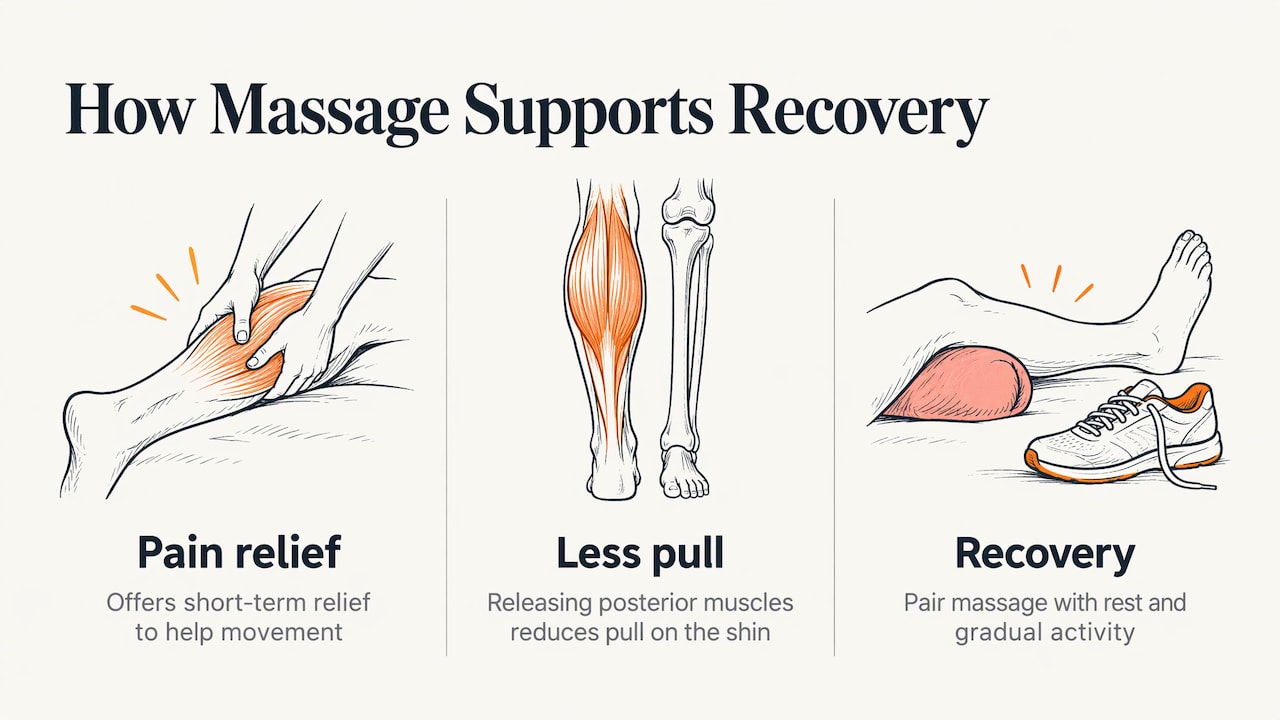
Massage can relax the muscles around the shins, and that is where its value lies. Muscle-and-tendon tension is part of what you feel with shin splints, and calming it can make walking, stretching and gradual training more comfortable. The 2020 AAFP and ACP guidance on acute musculoskeletal injuries found that massage therapy gives short-term pain relief, which is the realistic expectation here: relief that helps you move better while the bone and its attachments recover.
The mechanics are straightforward. A tight, fatigued calf complex passes more stress to the points where tissue attaches to the tibia, so releasing the posterior lower-leg muscles reduces the mechanical pull on the shin. Healing still takes time, which is why massage sits alongside rest and a sensible return to activity rather than replacing them.
What massage is best for shin splints?
There is no single named technique. These approaches cover the muscles involved:
| Approach | Where it works | What it is for |
|---|---|---|
| Sports massage | Calf, tibialis anterior, foot and ankle muscles | Easing training-related tension and supporting a return to running |
| Deep tissue massage | Soleus and gastrocnemius, deeper calf layers | Releasing chronic tightness in the posterior leg |
| Trigger point work | Specific knots in the calf or beside the shin | Reducing tender, tight spots that refer discomfort |
| Swedish massage | Whole leg, light to moderate pressure | General relaxation when the shin is too sore for firm pressure |
If you are choosing between the first two, our guide to deep tissue versus sports massage for training explains how they differ.
Which muscles to work, including the tibialis anterior
The tibialis anterior is the muscle on the front-outer side of the shin. It lifts your foot toward your shin (dorsiflexion) and works hard every time your foot lands. Professional bodywork literature from ABMP describes anterior compartment techniques such as deep cross-fiber applications combined with active engagement, where you move the foot while the therapist works the tissue.
The tibialis posterior sits deeper, behind the inner edge of the tibia. The same ABMP article describes a sidelying position, with the inner leg facing up. The therapist uses fingertips or a thumb to gently curl behind the medial border of the tibia. A slow stripping stroke follows during dorsiflexion, taking care not to press directly onto the periosteum, the membrane covering the bone.
The calf matters just as much. MedMassager notes that massage for shin splints targets the soleus, gastrocnemius, tibialis posterior and lateral lower-leg muscles, not the shin ridge itself, and that sustained direct pressure on the inner tibial border during an active flare can aggravate the inflamed periosteum.
In practice, a session for shin pain usually looks like this:
- Start with the calf. Broad, warming strokes through the gastrocnemius and soleus.
- Move to the sides of the shin. Lighter, slower work on the tibialis anterior and the muscles on the outer side.
- Address specific knots. Trigger point pressure on tender spots in the muscle belly, never on the bone.
- Finish with the foot and ankle. Particularly if flat feet or high arches are part of your story.
At every stage, your feedback sets the pressure. Our therapist, Rick Snider, is a licensed massage therapist who combines a healthcare background with athletic experience, and he keeps communication open through the session so the work stays within what you can comfortably take.
When massage should wait
This is the part that matters most for shins. Not every pain along the lower leg is shin splints, and some conditions need a medical evaluation before anyone touches the area.
Check the size of the sore spot
ABMP describes a simple screen called the 5 centimeter rule. Shin splints typically produce diffuse tenderness spanning at least 5 centimeters (about 2 inches) along the tibia. Tenderness you can cover with a coin is a major red flag for a tibial stress fracture, and manual therapy to that area is contraindicated. If your pain fits that second description, see a doctor first.
The same source points out that massage therapists do not diagnose. A structured assessment is there to rule out serious conditions that need referral to another health-care professional. We would rather you hear that before booking than after.
Other times to hold off
- Chronic exertional compartment syndrome flare-ups. ABMP states massage is contraindicated during a flare. Once activity has stopped and swelling and symptoms have settled, massage is generally considered safe.
- Red, hot or swelling shins. MedlinePlus advises contacting a provider if swelling gets worse or the shin is red and hot to the touch.
- Pain that does not improve. The same page says to contact a provider if pain persists after several weeks despite rest, ice and pain relievers.
- The first days after a trauma. If a fall or impact started the pain, or you suspect a fracture, get evaluated before any massage or device use.
These are the reasons a conversation at the start of a session is not a formality. Tell your therapist when the pain began, what you were doing, where exactly it hurts, and whether any single spot is sharp.
What recovery looks like beyond the table
Massage supports recovery, but the leg itself needs time. MedlinePlus recommends:
- Avoiding repetitive lower-leg exercise for 1 to 2 weeks.
- Icing the shins several times a day for 3 days or until the pain is gone.
- Stretching the shin and calf muscles.
- Taking ibuprofen, naproxen or aspirin if appropriate for you. Check with your doctor or pharmacist if you have a condition or take other medication.
- Using arch supports.
- Working with a physical therapist.
It also notes that shin splints can take 3 to 6 months to heal completely, and that activity can be increased slowly after 2 to 4 weeks if the pain is gone. Researchers writing in Runner’s World suggested that because the problem is likely a bony overload injury, rehab that supports bone recovery is appropriate, with several days of non-weight-bearing in some cases and a gradual build back to full function.
In plain terms: the table is where we reduce tension and help you feel better moving. The plan that keeps shin splints from returning is a cut in load now and a slow build later. If you want a sense of when to see a physical therapist instead of, or alongside, a massage therapist, read our comparison of physical therapy and massage.
Easing back into running
A typical return pattern follows the guidance above:
- Rest from repetitive lower-leg exercise for 1 to 2 weeks. Low-impact work such as swimming keeps you moving if your doctor agrees.
- When walking and daily activity are pain-free, add short, easy sessions after 2 to 4 weeks.
- Increase distance or intensity in small steps, and stop the session if the familiar ache returns.
- Check your shoes and the surfaces you run on, and consider arch supports if flat feet are part of the picture.
Other runners recovering from big efforts will find similar logic in guidance on pacing recovery after hard training, where rest days and gradual loading carry the plan.
Gentle care between sessions
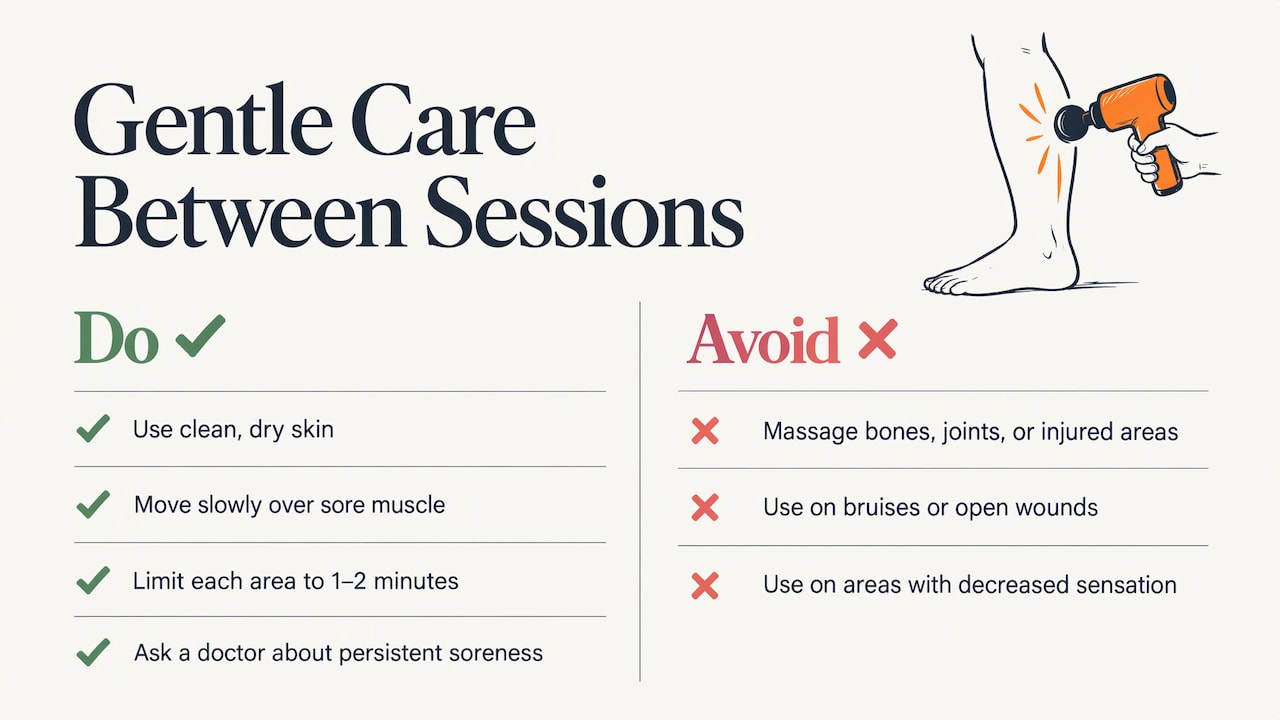
Between appointments, keep self-care gentle. Consumer Reports advises never massaging bones, joints or any injured area and having a doctor evaluate persistent soreness. For handheld percussion devices, the Mayo Clinic Store advises clean, dry skin, avoiding bony areas, gentle pressure, slow movement over sore muscle for 1 to 2 minutes per area, and no use on bruises, open wounds or areas with decreased sensation.
For a wider look at easing leg muscle tension, including devices and other massage approaches, see this guide to muscle release massage approaches.
A word on compression sleeves: some runners wear them for comfort, but we cannot point to a medical source that settles how they affect shin splints, so we leave that choice to you and your doctor. Rest, the right shoes and gradual loading come first.
Our perspective
Most people with shin splints arrive wanting us to dig into the shin. We do the opposite. We work the calf, the muscles beside the tibia and the foot, and we keep pressure off the bone.
Pain changes from week to week, so a fixed routine does not fit. That is why we talk through the session as we go: where it hurts, how firm is too firm, what the leg feels like afterward. A session that stays inside your comfort level does more for a sore lower leg than one that forces depth.
Our work draws on healthcare experience and an athlete’s understanding of training load. Deep tissue, sports and trigger point work each have a role, and so does knowing when a leg should see a doctor before it sees us. Used that way, massage helps you train again with less tightness and more confidence.
Operations
Shin splint massage in Austin
Howdy Massage offers sports, deep tissue, Swedish and trigger point massage in our Austin studio, and we also come to you with mobile sessions. Sports massage is published at $120 to $145, and deep tissue at $120 to $245. Tell us where the shin pain sits, what you were doing when it began and what you are training for, and we will shape the session around it. See all options on our massage services page.
If the tight spot is a knot in the calf rather than diffuse shin soreness, trigger point massage is the technique to ask about. Related lower-leg and foot problems are covered in our guides to Achilles tendonitis massage and plantar fasciitis massage.
FAQ
Can a massage gun help shin splints?
A massage gun can ease tension in the muscles beside the shin when used lightly and slowly. Keep it off the bone, use the lowest intensity first, and limit each area to 1 to 2 minutes, as the Mayo Clinic Store advises. Stop if pain increases, and skip it entirely after a fresh injury or if you suspect a fracture.
When should deep tissue massage be avoided with shin splints?
Avoid it when pain is pinpoint and smaller than a coin, since that can signal a stress fracture. Also hold off during a compartment syndrome flare, with a hot, red or increasingly swollen shin, or right after trauma. See a doctor first in those cases, then ask about massage once cleared.
Can flat feet cause shin splints?
They can contribute. Mayo Clinic and Yale Medicine both list flat feet, high arches and overpronation among the risk factors, alongside sudden training increases and hard surfaces. Supportive shoes, arch supports and calf and foot work can all be part of the plan.
How long do shin splints take to heal?
MedlinePlus says complete healing can take 3 to 6 months. Many people are back to gentle activity sooner: it advises 1 to 2 weeks away from repetitive lower-leg exercise, then a slow increase after 2 to 4 weeks if pain is gone. See a provider if pain lingers after several weeks of rest.
Sources
- Shin splints – Symptoms and causes, Mayo Clinic
- Shin Splints, Yale Medicine
- Management of Acute Pain from Non-Low Back Musculoskeletal Injuries, AAFP
- Decoding Shin Splints, ABMP
- Shin splints – self-care, MedlinePlus
- Shin Splint Treatment Remains Mysterious, Runner’s World
- Self-Massage: How to Give Yourself a Massage, Consumer Reports
- Massage guns and hot-cold therapy, Mayo Clinic Store
- Shin Splints Massage: Recovery Tips, MedMassager